The purpose of this exhibition is to enrich the common spaces of the Archive, but also to draw public attention to archives and archival material as basic and starting points for many scientific, professional and publicistic research, but also for research for private purposes. It is for this reason that the exhibits are divided into units that clearly show only a few branches of science and professions that research sources can find in archival material. In addition to the above, it was important for us to include among the exhibits the works of people who left their mark and entrusted Istria with their exceptional talent and dedicated work. The presentation of the Glagolitic script, which is, among other things, a testimony to the centuries-old connection of Istria with Croatian cultural spaces, was unavoidable. present the most valuable, significant and, of course, the most attractive material. It was quite difficult and demanding to choose the most representative one since we care about almost 4.5 km of material and most of it is worth showing. However, places are small and should be limited to a certain number of exhibits. We have a total of 42 posters.
The concept of the exhibition is as follows: at the entrance to the building there is a Decision on the establishment of the Archive and the cadastral plan of the town of Pazin from 1820, where three buildings were highlighted, in which the Archive today has working and storage spaces. The plan also includes photographs of the buildings from the time when the Archives began to operate. In the hallway (in front of the Grand Hall) there are exhibits of judicial provenance: material created by the work of a notary where it is worth noting the document from probably 1200, which is the oldest document stored in the Archives. Followed by the urbar of the Pazin principality.


![HR-DAPA-12 Pazin Principality (Graffschaft Mitterburg, Contea di Pisino), 1571/1918[1919/1934], 1. Urbar (1571)](https://www.dapa.hr/wp-content/gallery/05_izlozbe/00_Stalni_postav/06.jpg "HR-DAPA-12 Pazin Principality (Graffschaft Mitterburg, Contea di Pisino), 1571/1918[1919/1934], 1. Urbar (1571)")
The following unit, which is located on a staircase on the mezzanine floor, consists of documents from the field of musical art: music records and uniforms of members of Istrian music associations from the beginning of the 20th century.
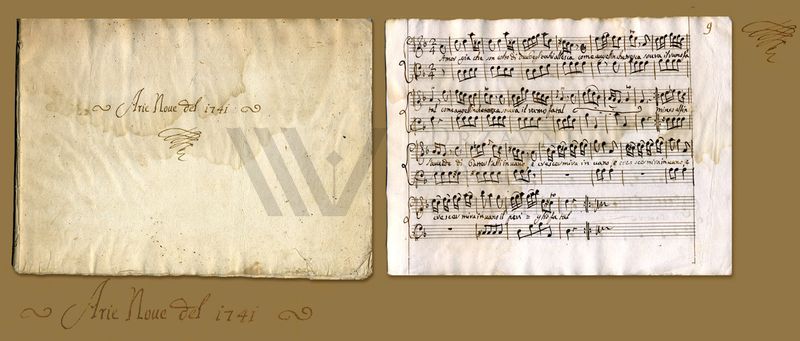


Furthermore, interesting prints are exhibited opposite each other, and between them there is a series of writings written in Glagolitic.


![HR-DAPA-811 Podestat općine Labin i Plomin (Acta cancellariae Albona et Fianona) 1512/1797[1797/1814], List of dowry Orse, daughter of Martin Velčić (23 May 1588), knj. 6a, angle. 3](https://www.dapa.hr/wp-content/gallery/05_izlozbe/00_Stalni_postav/12.jpg "HR-DAPA-811 Podestat općine Labin i Plomin (Acta cancellariae Albona et Fianona) 1512/1797[1797/1814], List of dowry Orse, daughter of Martin Velčić (23 May 1588), knj. 6a, angle. 3")
Below are exhibits in the field of construction and architecture and the plan of the city of Pula.
![HR-DAPA-67 Municipality of Pula (Municipio di Pola), 1919/1943[1943-1947], 1. Plan of Arena Pula, February 1933; angle. 221](https://www.dapa.hr/wp-content/gallery/05_izlozbe/00_Stalni_postav/15.jpg "HR-DAPA-67 Municipality of Pula (Municipio di Pola), 1919/1943[1943-1947], 1. Plan of Arena Pula, February 1933; angle. 221")

![HR-DAPA-67 Municipality of Pula (Municipio di Pola), 1919/1943[1943-1947], Plan Pula](https://www.dapa.hr/wp-content/gallery/05_izlozbe/00_Stalni_postav/24.jpg "HR-DAPA-67 Municipality of Pula (Municipio di Pola), 1919/1943[1943-1947], Plan Pula")
On the first floor, next to the bulletin board is Cavalli's Herbarium from 1719. The space in front of the Reading Room is enriched with copies of the archives from the library funds. Along with this valuable material, a copy of the letter of Bishop Juraj Dobrila took its place.


At the bottom of the room is a draft of the bathroom of the famous Hütterott family who lived on the island near Rovinj. The exhibition is closed by two aesthetically very luxurious family trees.
![HR-DAPA-806 Hütterott Family, [1862]1890-1945, 7.3. Real estate (1891-1943), 7.3.1. Island of Sv. Andrija (1891-1943), 6356 Bathroom design in a villa on the island of Sv. Andrew created by Technisches Bureau C. Korte & Co (1905), angle. 18](https://www.dapa.hr/wp-content/gallery/05_izlozbe/00_Stalni_postav/20.jpg "HR-DAPA-806 Hütterott Family, [1862]1890-1945, 7.3. Real estate (1891-1943), 7.3.1. Island of Sv. Andrija (1891-1943), 6356 Bathroom design in a villa on the island of Sv. Andrew created by Technisches Bureau C. Korte & Co (1905), angle. 18")
![HR-DAPA-12 Pazin Principality (Graffschaft Mitterburg, Contea di Pisino), 1571/1918[1919/1934], De Segher Family Tree (1826)](https://www.dapa.hr/wp-content/gallery/05_izlozbe/00_Stalni_postav/21.jpg "HR-DAPA-12 Pazin Principality (Graffschaft Mitterburg, Contea di Pisino), 1571/1918[1919/1934], De Segher Family Tree (1826)")

Note that each whole is opened by a legend with a short introduction to the content of the whole and a list of exhibits in it, while the exhibits are listed in a way to monitor their placement in the Archives. We believe that this exhibition, set up to testify more permanently to the Istrian archival values, will be successful by arousing interest in our profession and the need to protect the segment of cultural goods for which it exists.

