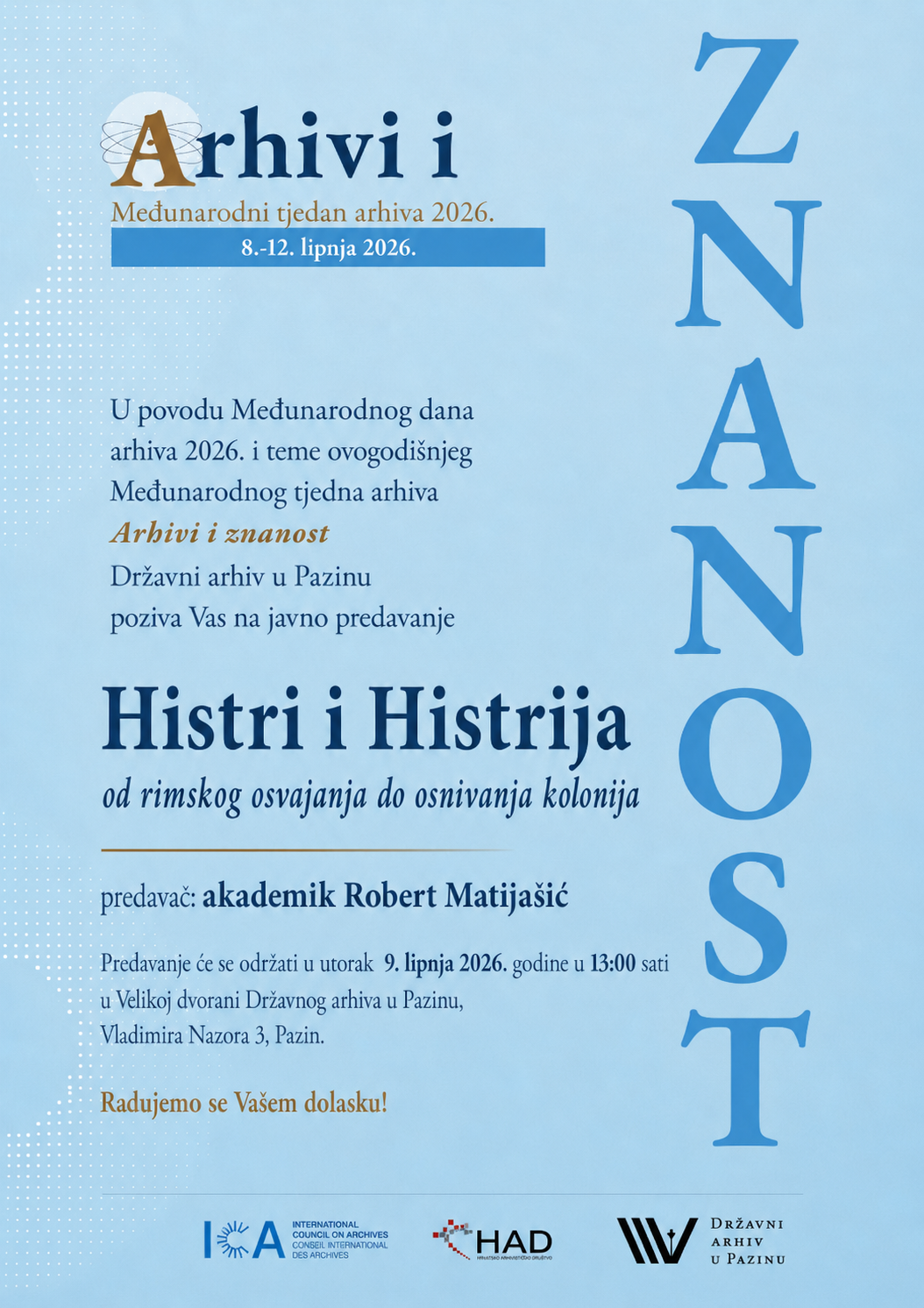
Histri and Histria from the Roman conquest to the founding of colonies
Among the historical problems of the oldest history of Istria, it seems interesting to ask the question of what happened to Histri, the pre-Roman inhabitants of the peninsula, after their defeat in the war of 178. 177 BC BC This war is well known thanks to the preserved text of historian Tito Livius, who describes in detail the military campaign, the siege of Nesactium and its conquest, although there are also open questions in this description. But written sources are generally very stingy about the next 130 years, until colonies are founded. Half i Parentium Approximately 45 BC. BC During this period - it is quite clear - nothing happened that would attract the attention of chroniclers of general Roman history, so we conclude that the Romans did not immediately approach the physical adoption of Istria. It was only after the founding of the colonies that a large number of Roman citizens settled, but they occupied a large area where the descendants of the conquered Histrians lived until then. Archaeological sources do not provide much data either, but lately some new finds are beginning to shed new light at the end of the 2nd and beginning of the 1st century BC. BC
Robert Matijašić Born in Pula in 1957, in Zagreb in 1979 he graduated in archaeology and English language and literature, where he received his master's degree in 1985 and his doctoral degree in 1994. From 1980 to 1996 he worked at the Archaeological Museum of Istria in Pula. Since 1996 he has been working at the Faculty of Humanities and Social Sciences in Pula, then the University of Rijeka, and today the University of Juraj Dobrila, where he teaches subjects of old history, and since 2018 ancient archaeology. He was the leader and collaborator of several well-known projects, published about two hundred professional and scientific texts in domestic and foreign journals and proceedings, 10 Austro-Hungarian and co-authored books, several editorial books. He is a regular member of the Croatian Academy of Sciences and Arts, in the Department of Social Sciences.

